
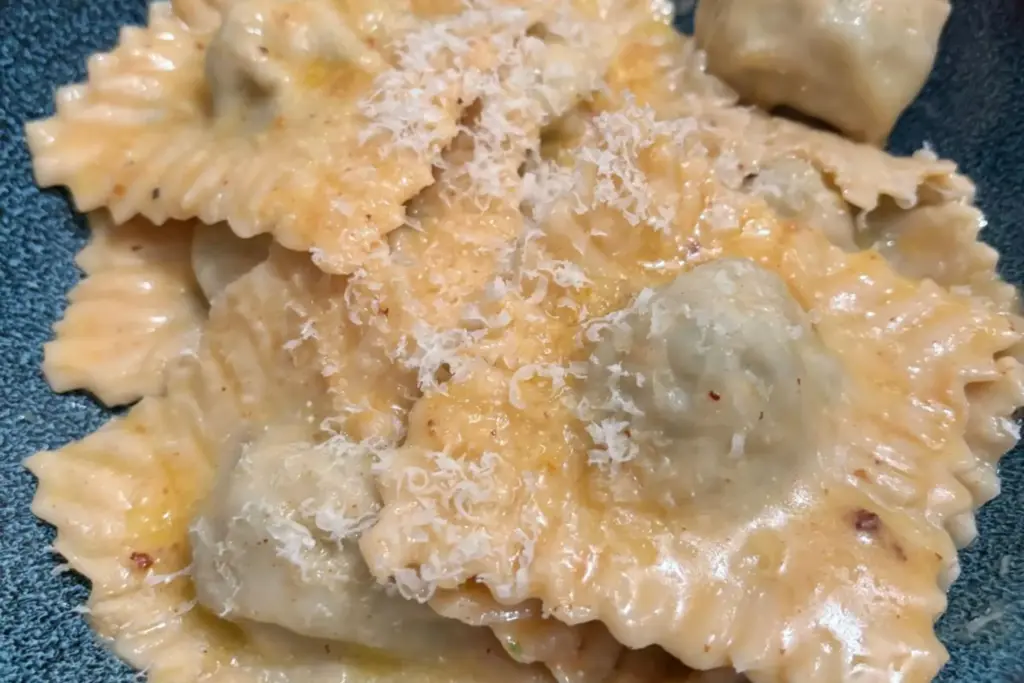
The filling that started as leftovers
This one came from having ricotta and spinach in the fridge at the same time, which is probably how most good pasta dishes start. Ricotta and spinach ravioli turns up all over northern and central Italy in different forms, under different names, with small variations in the filling and shape depending on where you happen to be. It’s not one region’s dish. It’s more of a shared understanding that these two things belong together inside pasta, and that brown butter and sage is the only sauce you need.
The version here is straightforward. Fresh pasta, a well-seasoned filling, sage butter made properly. Scroll down for a note on adding sausage to the filling, which is not traditional but is very good.
Getting the filling right
The spinach needs to be as dry as you can get it. Blanch it, drain it, squeeze it, then squeeze it again. A whole bag of fresh spinach will reduce to what looks like almost nothing, which is correct. Chop it finely so it mixes evenly into the ricotta rather than sitting in uneven clumps.
Season the filling more than you think you need to. Taste it before it goes anywhere near the pasta. The pasta itself has almost no flavour, so the filling has to do all the work.
The egg in the filling is there to bind everything together so it holds its shape when the ravioli are cut and cooked. Don’t skip it.
On the nutmeg
A small pinch of freshly grated nutmeg in the filling is traditional and makes a real difference. You don’t want to taste nutmeg specifically, you just want the filling to taste slightly more interesting than it would without it. If you grate it fresh rather than using the dusty stuff from a jar the difference is noticeable.
On the pasta thickness
Setting 3 on the pasta machine gives you something with proper bite. You can go thinner for something more delicate, but for a filling this substantial the slightly thicker sheet holds up better and gives you something satisfying to eat through. It’s also more forgiving to work with when you’re filling and sealing, which matters when you’re making a large batch.
A note on the sausage
If you have a good quality coarse sausage, one with a high pork and fat content rather than the cheap grainy stuff, crumbling a little into the filling is not traditional but works very well. Remove the skin, crumble the meat, brown it briefly in a dry pan, let it cool completely, then fold it through the ricotta and spinach mixture. It adds depth and makes the filling feel more substantial. Leave it out for the cleaner classic version. Include it if you want to find out what happens when you make a good decision with leftovers!