
The story behind pizzoccheri
There’s a valley in Lombardy that sits so high in the Alps it barely gets enough sun to grow anything useful. The Valtellina runs northeast from Lake Como along the Swiss border, narrow and steep-sided, and for centuries the only grain that would actually grow up there was buckwheat. Not because anyone particularly wanted buckwheat, but because buckwheat is spectacularly unbothered by rocky soil, short summers, and the kind of cold that makes other crops give up entirely. It grows quickly, resists frost, and provides more nutrition per acre than almost anything else that would survive up there. The locals made the best of it. The result is pizzoccheri.
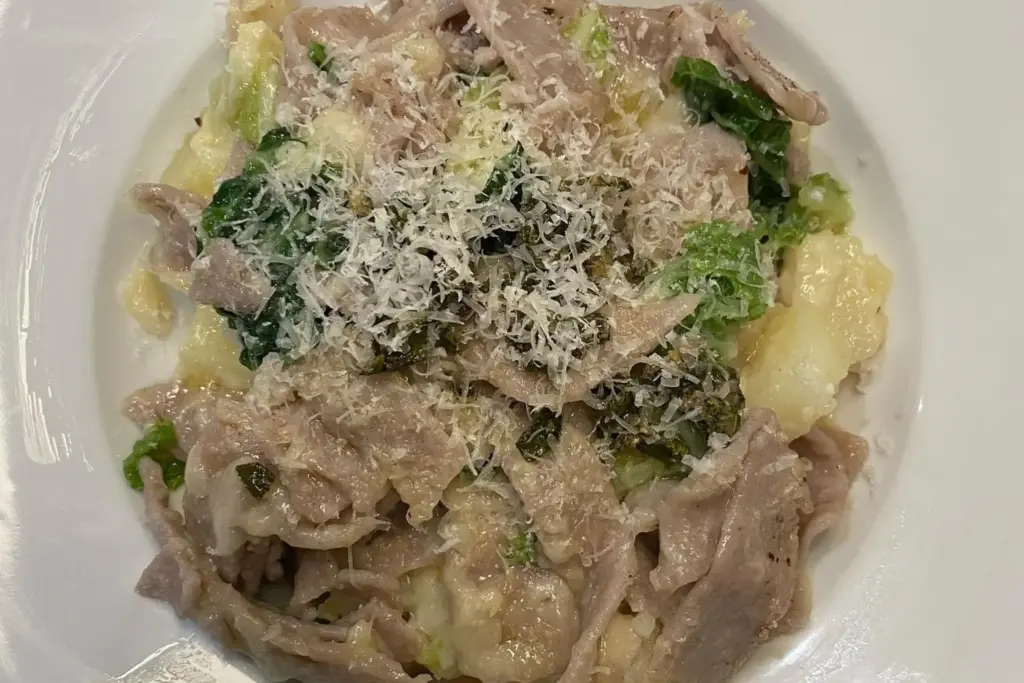
Before you think too much about the photo, yes, it looks like that. Grey pasta, cabbage, potatoes. It sounds, frankly, like something you’d eat if you’d run out of everything else. Chiesa in Valmalenco sits at the head of the valley, a small mountain town where they ski in winter and eat extremely well year round. It’s the kind of place where pizzoccheri arrives at the table looking like something assembled from leftover vegetables and good intentions, and tastes like the best thing you’ve had in years. Nobody who orders it for the first time is prepared for that. Trust the process.
Buckwheat in the Valtellina
The Valtellina is one of the most beautiful regions in the world. Terraced vineyards climbing impossibly steep mountain slopes, medieval villages clinging to the valley sides, the kind of landscape that stops you mid-sentence. It is also one of the most overlooked when people talk about Italian food. Everyone knows Tuscany, everyone knows Naples, everyone knows Rome. The Valtellina quietly gets on with producing some of the most distinctive, honest cooking in the country, largely unbothered by the attention it deserves.
Buckwheat has been documented growing here since 1616, when the governor of the Adda Valley recorded it as the main crop on the Rhaetian side of the Alps, a fact confirmed in the official EU geographical indications register. By the 1800s, the valley was milling over 1,800 tonnes of it per year. It’s technically not a grain at all. It’s a seed from a flowering plant, related to rhubarb and sorrel, which is why the flour has that slightly earthy, nutty quality that makes pizzoccheri taste like nothing else. It’s also why people with hay fever occasionally sneeze when handling the flour. You’ve been warned.
What you’re actually making
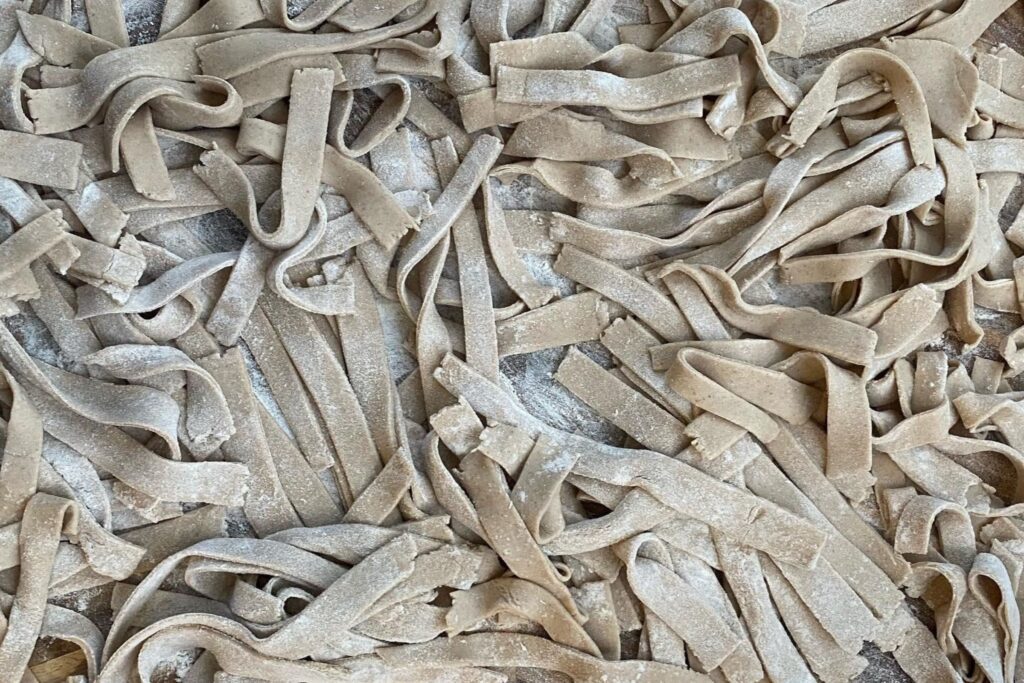
Pizzoccheri is a fresh pasta made from at least 20% buckwheat flour, produced exclusively in the Province of Sondrio. The recipe is protected by EU IGP status granted in September 2016, meaning anything made outside that valley with different flour ratios cannot legally call itself Pizzoccheri della Valtellina. The pasta is boiled together with waxy potatoes and savoy cabbage, then layered into a dish with a frankly irresponsible quantity of alpine cheese and drenched in garlicky sage butter. It is not a light dish. It is not trying to be. It is the kind of food that makes sense after a morning at altitude and makes considerably less sense on a weekday evening. If you are on a diet, or not an alpine farmer, you have been warned twice now. Make it anyway.
A word on the cheese
Casera is the traditional choice, a semi-soft alpine DOP cheese from the Valtellina that melts beautifully. Outside specialist Italian delis it’s virtually impossible to find in the UK. Gruyère works brilliantly, same meltability, similar savoury depth. Add a generous handful of Parmigiano Reggiano for sharpness and you’re in the right territory. Don’t stress about authenticity here. The authentic version uses local cheese that doesn’t travel. Use the best alpine cheese you can find. That’s fine.