
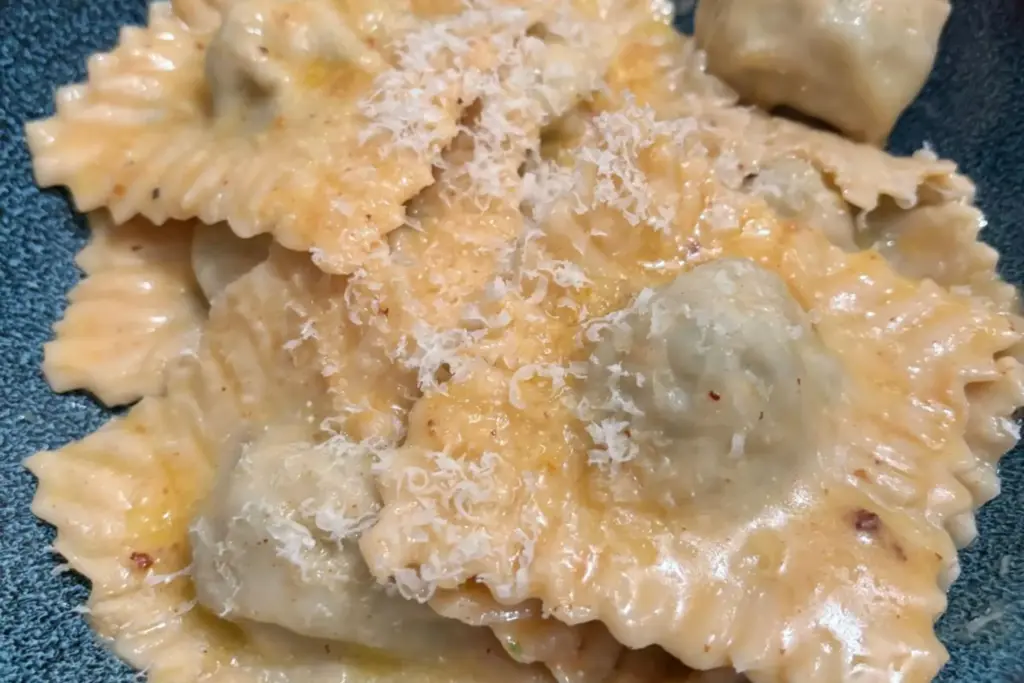
Ricotta and Spinach Ravioli

1 hour 30 minutes
Medium
Serves 4
Fresh pasta filled with ricotta, spinach and a little something extra. Served with brown butter and crispy sage. Worth every minute it takes.
Ricotta and Spinach Ravioli

The filling that started as leftovers

This one came from having ricotta and spinach in the fridge at the same time, which is probably how most good pasta dishes start. Ricotta and spinach ravioli turns up all over northern and central Italy in different forms, under different names, with small variations in the filling and shape depending on where you happen to be. It’s not one region’s dish. It’s more of a shared understanding that these two things belong together inside pasta, and that brown butter and sage is the only sauce you need.

The version here is straightforward. Fresh pasta, a well-seasoned filling, sage butter made properly. Scroll down for a note on adding sausage to the filling, which is not traditional but is very good.

Getting the filling right

The spinach needs to be as dry as you can get it. Blanch it, drain it, squeeze it, then squeeze it again. A whole bag of fresh spinach will reduce to what looks like almost nothing, which is correct. Chop it finely so it mixes evenly into the ricotta rather than sitting in uneven clumps.

Season the filling more than you think you need to. Taste it before it goes anywhere near the pasta. The pasta itself has almost no flavour, so the filling has to do all the work.

The egg in the filling is there to bind everything together so it holds its shape when the ravioli are cut and cooked. Don’t skip it.

On the nutmeg

A small pinch of freshly grated nutmeg in the filling is traditional and makes a real difference. You don’t want to taste nutmeg specifically, you just want the filling to taste slightly more interesting than it would without it. If you grate it fresh rather than using the dusty stuff from a jar the difference is noticeable.

On the pasta thickness

Setting 3 on the pasta machine gives you something with proper bite. You can go thinner for something more delicate, but for a filling this substantial the slightly thicker sheet holds up better and gives you something satisfying to eat through. It’s also more forgiving to work with when you’re filling and sealing, which matters when you’re making a large batch.

A note on the sausage

If you have a good quality coarse sausage, one with a high pork and fat content rather than the cheap grainy stuff, crumbling a little into the filling is not traditional but works very well. Remove the skin, crumble the meat, brown it briefly in a dry pan, let it cool completely, then fold it through the ricotta and spinach mixture. It adds depth and makes the filling feel more substantial. Leave it out for the cleaner classic version. Include it if you want to find out what happens when you make a good decision with leftovers!

Method

1
Make the dough
Tip the flour onto a clean surface and make a well in the centre. Crack the eggs in, add the salt, and beat them with a fork, slowly pulling flour in from the edges as you go. Once it comes together into a rough dough, knead by hand for 8-10 minutes until smooth and elastic. It should feel firm but pliable, and shouldn't stick to your hands. Wrap in cling film and rest for at least 30 minutes in the fridge.
2
Make the filling
Blanch the spinach in well-salted boiling water for 1-2 minutes until wilted. Drain and run under cold water. Now squeeze out as much water as you possibly can. Keep squeezing. It will reduce to almost nothing, which is exactly right. Chop it finely, then mix with the ricotta, Parmigiano, egg, nutmeg, salt and pepper. Taste it and season well. The filling needs to carry all the flavour since the pasta itself is quite neutral.
3
Roll the pasta
Divide the dough into four pieces and keep the rest wrapped so they don't dry out. Flatten each piece slightly with your hands, then feed through the pasta machine starting at the widest setting. Feed through a couple of times at the same setting, then work your way down to setting 3. You want sheets with a bit of bite but thin enough that you can just about see your hand through them when held up to the light.
4
Fill and seal
Lay a sheet of pasta on a lightly floured surface. Place teaspoon-sized mounds of filling at regular intervals down one half of the sheet, leaving about 3-4cm between each. Wet the pasta around each mound with a damp finger. Fold the other half of the sheet over and press down firmly around each mound, pushing all the air out as you go. Cut into squares with a knife or ravioli cutter and crimp the edges firmly with a fork. Keep finished ravioli on a well-floured tray and don't let them touch each other or they'll stick.
5
Make the sage butter
Melt the butter in a wide pan over medium heat. Add the garlic and sage leaves and cook gently, swirling occasionally, until the butter turns golden brown and the sage goes crispy. About 3-4 minutes. Don't let it burn. Remove the garlic and keep the pan warm on the lowest heat while you cook the pasta.
6
Cook and serve
Bring a very large pot of well-salted water to a rolling boil. Cook the ravioli in batches. They're done when they float to the surface, usually 2-3 minutes. Remove with a slotted spoon directly into the pan with the sage butter and toss gently to coat. Serve immediately with extra Parmigiano grated over the top and the crispy sage leaves scattered on.

Drinks pairing

A dry white wine works well. Pinot Grigio, Soave, whatever you have open. If you’re not drinking, sparkling water with lemon does the same job of cutting through the butter. Cloudy apple juice is also genuinely good with this.

Ingredients

Serves 4
300 g00 flour, plus extra for dusting
3 Wholeeggs
1 Pinchfine salt
400 gfresh spinach
250 gricotta, drained
60 gParmigiano Reggiano, freshly grated
1 Wholeegg, for the filling
1 Pinchnutmeg
1 Pinchblack pepper, freshly ground
100 gbutter
8 Wholesage leaves
1 Wholegarlic clove, crushed
Tools needed
Pasta machine, sharp knife or ravioli cutter, fork for crimping, large pasta pot, slotted spoon, small saucepan, large floured tray

Made this dish?

Show us your plate. Tag us on Instagram and we’ll share our favourites every month.